
WEATHER POLICY
CJSL Weather Policy
Player Safety First – Clear Communication – Match Day Responsibility
The CJSL Weather Policy is in place to ensure the safety of all players, coaches, referees, and spectators while maintaining clear and consistent procedures for match day decisions.
Weather-related decisions must always prioritize player safety and follow CJSL guidelines and U.S. Soccer best practices.
Match Day Responsibility
- The home team is responsible for determining field status as early as possible.
- All cancellations must be communicated to the opposing club, league, and referee assignor.
- The home team MUST submit the official CJSL Weather Game Cancel Form for any cancellation.
- Notification MUST be made no later than 2 hours prior to scheduled game time.
- Failure to provide proper notice may result in league action, including a forfeit.
- Referees must be notified in advance to avoid unnecessary travel.
Turf Field Policy
- All games scheduled on turf fields are ON as scheduled.
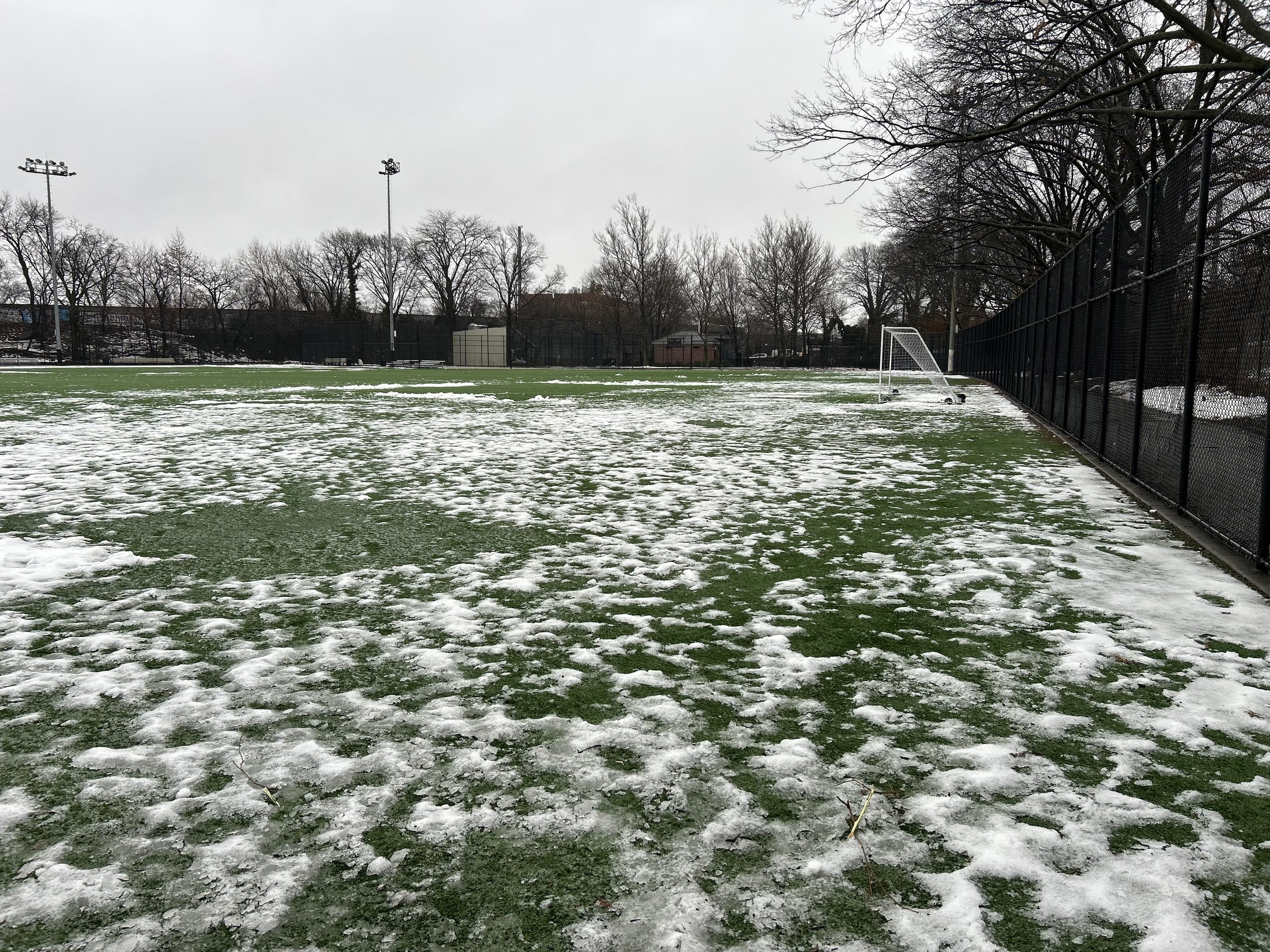
- Games may only be canceled if the field is deemed unplayable due to flooding, ice, or snow.
- Proof must be submitted via the official CJSL Weather Game Cancel Form.
- The referee on site has final authority to deem the field unsafe and unplayable.
Grass Field Policy
- Games may be canceled if the Parks Department officially closes the field.
- Games may be canceled if field conditions are unsafe for play.
- The referee on site has final authority to deem the field unsafe and unplayable.
- Unplayable conditions include standing water, mud, frozen ground, or hazardous surfaces.
- All cancellations must be properly reported using the CJSL Weather Game Cancel Form.
Severe Weather & Safety Guidelines
- The referee has full authority to delay, suspend, or abandon a match due to weather conditions.
- Lightning, extreme heat, and severe weather must be taken seriously at all times.
- Clubs must follow U.S. Soccer Recognize to Recover guidelines.
- Player safety takes priority over all scheduling concerns.
Rescheduling Matches
- Clubs must work together to reschedule any canceled matches.
- All rescheduled matches must follow CJSL scheduling procedures.
- A Game Change Request (GCR) must be submitted once a new date is agreed upon.
CJSL Authority
- CJSL reserves the right to review any weather-related cancellation.
- If a cancellation is deemed unjustified, the match may be recorded as a forfeit.
- CJSL has final authority on all match status decisions.
Key Reminders
- Turf games are ON unless proven unplayable
- Grass games depend on safety and field conditions
- Home team must notify and submit cancellation no later than 2 hours prior to kickoff
- Referee has final authority on site
- All cancellations require the CJSL Weather Game Cancel Form
- Player safety always comes first