
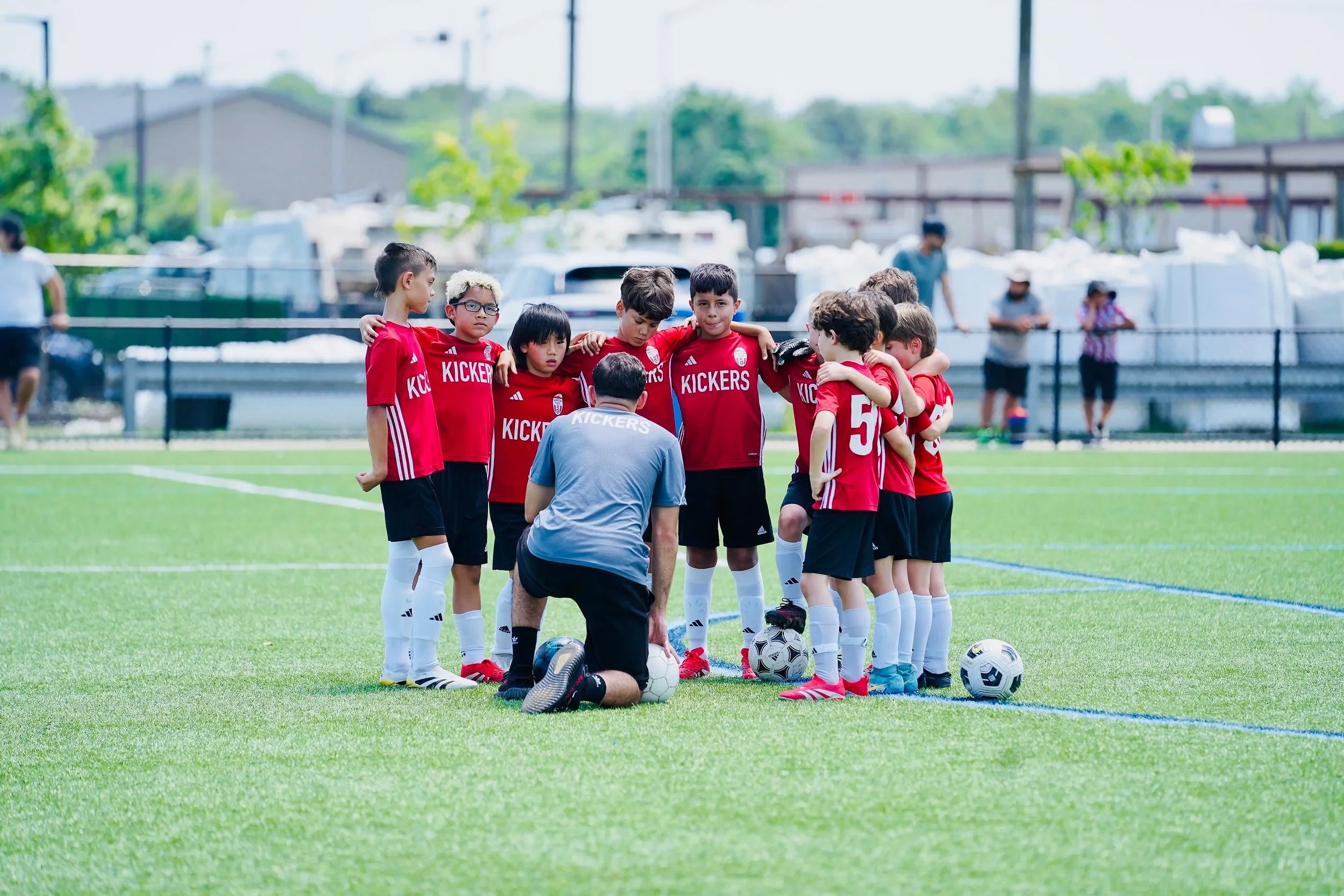
COACHES
CJSL Coaching Education & Requirements
Supporting higher coaching standards, continued education, player development, and full league compliance across all CJSL travel programs.
Coaching Requirements
CJSL supports the ENYYSA Grassroots Initiative to uphold the highest coaching standards.
Coaches in CJSL must meet all U.S. Soccer and ENYYSA Safe Soccer requirements in order to be approved for league play.
Required:
* US Soccer Coaching License (minimum Grassroots in-person or higher)* Background Check and Safe Sport Training
* Heads Up Concussion Training
* Adult Code of Conduct / Ethics Agreement
* Must be fully registered and approved in GotSport
Coach & Adult Compliance Requirements
Player safety is a shared responsibility. All CJSL coaches must complete and maintain the required ENYYSA Safe Soccer risk-management requirements before participating in league activities.
Coach & Adult Compliance Checklist
Before participating in any CJSL activity, coaches and adult participants must complete all applicable requirements below.
SafeSport Training
Required abuse-prevention education for coaches and adult participants working with youth players.
Background Check
Required screening for coaches, team officials, volunteers, administrators, and other adults working with youth players.
Concussion Training
CDC Heads Up training helps adults recognize concussion symptoms and respond appropriately.
Grassroots Coaching License
Travel coaches must meet the applicable U.S. Soccer Grassroots coaching education mandate before being rostered.
Code of Ethics Acknowledgement
All coaches, team officials, volunteers, board members, administrators, and adult participants must read and acknowledge the CJSL Code of Ethics.
GotSport Approval
Once all requirements are complete and approved, the adult participant may be rostered and take part in CJSL activities.
Minimum Coaching License Requirement
All travel coaches are required to obtain a minimum U.S. Soccer Grassroots in-person license, an equivalent course, or a higher qualification, in addition to all required coach compliance certifications.
Coaching Education
To support both compliance and continued growth, CJSL is proud to offer a robust lineup of U.S. Soccer Grassroots Coaching Courses.
In addition to English-language sessions, Spanish-language courses are also available through ENYYSA partners to ensure broader access across our multicultural community.
- New coaches who need their first license to be eligible for league play
- Experienced coaches looking to advance their credentials
- Club leadership seeking to elevate coaching standards and support player development
U.S. Soccer Coaching License Pathway
CJSL travel team coaches must have a minimum U.S. Soccer Grassroots License and may continue advancing through the national pathway.
Upcoming U.S. Soccer Grassroots Courses
Hosted by Asphalt Green in Manhattan and WYSL in Rye Brook. Space is limited, and early registration is encouraged.
July & August 2026 Courses
September 2026 Courses
CJSL Coaching Standards and Ethics
Coaches are expected to lead by example and uphold league standards before, during, and after every match.
Coaches play a central role in shaping the matchday environment, the development of players, and the overall culture of the game. Within CJSL, coaching standards are not only about tactics and team management, but also about leadership, responsibility, respect, and example. Coaches are expected to promote player development first, uphold the Laws of the Game, support referees, manage sidelines properly, and help create a safe, professional, and respectful environment at all times.
- Coaches must never place the value of winning over the safety and welfare of players.
- Players should be instructed to play within both the Laws of the Game and the spirit of the game at all times.
- Coaches must not seek an unfair advantage by encouraging deliberate unsportsmanlike behavior.
- Unsporting or inappropriate behavior from players or adults should never be tolerated.
- The demands placed on players should not interfere with academic goals or progress.
- Coaches must never encourage players or other adults to violate league rules, policies, or procedures.
- Players should be directed to seek proper medical attention for injuries and follow medical guidance for treatment and recovery.
- Player development must always come first, with team results second.
- Coaches must not discriminate against any player based on race, gender, gender identity, sexual orientation, language, appearance, religion, physical ability, financial ability, or any other personal characteristic.
- Derogatory comments toward any player are strictly unacceptable.
- Coaches must never engage in communication toward a player that has any sexual implication or connotation.
- All coaches must adhere at all times to CJSL, ENYYSA, and US Youth Soccer rules, bylaws, and policies.
- Club-related issues should first be addressed between the clubs whenever possible.
- If a matter cannot be resolved directly, it should then be referred to CJSL through the proper league process.
- Coaches are expected to understand and follow all CJSL matchday, roster, conduct, and safety requirements.
- Coaches should be thoroughly familiar with the Laws of the Game and demonstrate a working knowledge of them.
- Coaches are responsible for helping players understand both the intent and application of the Laws of the Game.
- Coaches must uphold both the letter and the spirit of the game.
- Coaches are responsible for the conduct of their players before, during, and after the match.
- Players must never be permitted or encouraged to act in a way intended to injure an opponent.
- Good sporting behavior must be consistently taught and reinforced.
- Referees must have the support of coaches, players, and spectators.
- Coaches must refrain from criticizing referees in the presence of players or spectators.
- Professional respect before, during, and after the match must be mutual.
- There must be no demeaning, threatening, or abusive language or gestures directed toward referees.
- Coaches must not incite players, parents, or spectators or attempt to disrupt the flow of the game.
- Coaches are expected to help maintain a safe match environment for players, referees, and spectators.
- Concerns regarding referee performance should be reported to CJSL through the proper reporting process, not handled through confrontation on the field.
- Coaches are expected to conduct themselves properly in public while representing their team, club, and CJSL.
- Coaches must use their influence to prevent intimidating, disruptive, or unacceptable behavior from spectators.
- The conduct of a coach should always reflect positively on the club and the league.
- Rivalry and competition must never take precedence over professionalism and self-control.
- Verbal altercations with opposing coaches, players, spectators, or officials are unacceptable before, during, and after matches.